

"ICE has not improved labor markets(?)
The impact of deportations on US workers has more than meets the eye

Tyler Cowen says ICE has not improved labor markets, and while that would make sense, it’s not entirely true (when you look under the hood)
ICE is bad for non-college males, but good for healthcare? confound it!
St. Louis Fed says “actually, maybe ICE did push up wages”
a coda on “home healthcare [fraud] makes all the jobs”
👉👉👉Reminder to sign up for the Weekly Recap only, if daily emails is too much. Find me on twitter, for more fun. 👋👋👋Random Walk has been piloting some other initiatives and now would like to hear from broader universe of you:
(1) 🛎️ Schedule a time to chat with me. I want to know what would be valuable to you.
(2) 💡 Find out more about Random Walk Idea Dinners. High-Signal Serendipity.“ICE has not improved labor markets(?)”
Tyler Cowen, the GOAT of generalist infovore internet-writing, surfaced a paper on the “the labor impacts of ICE,” with (his own) provocative header “ICE has not improved US labor markets.”
The gist of the paper is that deportations negatively impacted US workers, who had smaller employment and wage gains, relative to US workers in low-deportations areas.
From an econ 101 standpoint, it’s an expected result. Immigration is generally considered a positive-sum game: new arrivals get to work, which boosts productivity, and more productivity is good for native- and foreign-born alike.
There have been exceptions, of course. During the great labor-market catch-up, the trad 101 model was flipped on its head (at least in the near-term): pandemic retirees left a gaping hole in the labor market, which caused wages and prices to soar, and that hole was largely filled by migrants, which brought wages and inflation to heel. As Random Walk, and later Goldman Sachs, offered at the time: the standard 101 model of immigration’s impact on the labor force may not apply during periods of an acute supply shock. In that case, a migrant surge was deflationary.
True enough, but the supply shock is basically gone.1
That being the case, then it’s not unreasonable to think that the 101 expectation would hold, i.e. that deportations would hurt, rather than benefit, US workers. And a W for Econ 101 is what the paper purports to show
Obviously, from a MAGA politics standpoint, the result is disappointing: booting migrants is supposed to benefit American workers, not hurt them.
So does that mean that MAGA lost the day?
Well, maybe, but you wouldn’t know it from the research cited by the good Professor Cowen—at least, not when you dig under the hood (and I say that even though I’m inclined towards the 101 expectation).2
Non-college male construction workers effected
The primary finding of the research is that deportations had negative effects on native born employment and wages. But not everywhere and not for everyone.
It’s non-college male/construction that’s doing all the paper’s work:

Negative effects for predominantly male construction, whereas, effects on women and/or other sectors were null and/or positive.
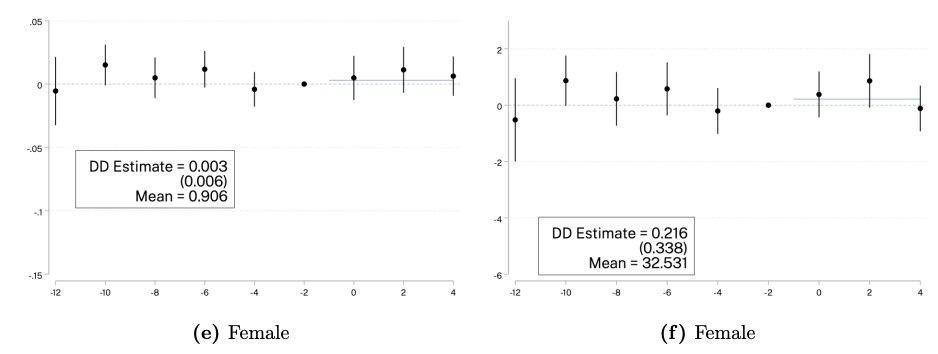
The researchers (fairly) lean on the negative impacts to non-college male construction work to make their point because it’s a segment of the labor market that has a lot of illegal immigrants.
True enough.
ICYMI


![Uncharted waters (reprise); Almighty Consumer check; Healthcare[-fraud] GDP?; AI-Lawyering for Me; Longs, but not shorts](https://substackcdn.com/image/fetch/$s_!MpiH!,w_140,h_140,c_fill,f_webp,q_auto:good,fl_progressive:steep,g_auto/https%3A%2F%2Fsubstack-post-media.s3.amazonaws.com%2Fpublic%2Fimages%2F00da6c53-cccf-43f3-b00b-ba932898ae46_429x429.png)


Here’s the other thing, though, about construction, especially residential construction: there’s been a pretty substantial industry slowdown, having very little to do with immigration.
That’s a big-time confounding effect.3
In other words, the crown-jewel discovery of the research—that employment conditions for male construction workers declined—is pretty easily explained by cyclical demand (and not deportations).4 Somewhat surprisingly, that fairly obvious and substantial confounding factor does not appear to have played any role in the study (other than the general comparison to the “control,” i.e. zip-codes with fewer deportations).5
So, it’s not exactly 1 point for MAGA, but it’s not exactly 1 point for Econ 101, either.
But ICE is good for healthcare?
That cyclical demand (as opposed to deportations) is the prime mover is consistent with the paper’s other finding: null and/or positive effects for women and their sector of choice, i.e. healthcare.
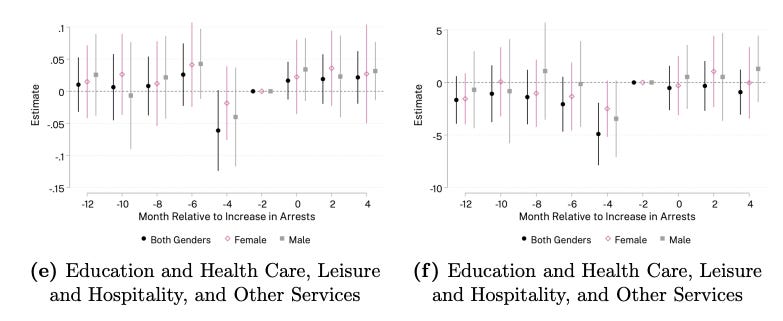
Healthcare employment (and wages for men) improved following the surge in ICE arrests.
As Random Walk has offered countless times, there is no stopping the healthcare demand train, and the Rotation to the National Nursing Home, continues apace. As a result, it’s a been very much a “women’s world” out there, and has been for some time:
