

Of Burritos and the Price of Status
More data on consumption, and a theory of how things are

can’t stop consooming;
discretionary is cooking;
lower-income consumers throwing their weight around
of burritos and status, a theory of and for the disgruntled
👉👉👉Reminder to sign up for the Weekly Recap only, if daily emails is too much. Find me on twitter, for more fun. 👋👋👋Random Walk has been piloting some other initiatives and now would like to hear from broader universe of you:
(1) 🛎️ Schedule a time to chat with me. I want to know what would be valuable to you.
(2) 💡 Find out more about Random Walk Idea Dinners. High-Signal Serendipity.Of Burritos and the Price of Status
Continuing to ruminate on the theme of “of course, burritos are more expensive . . . what’d you think would happen when burrito-makers became more expensive?” and otherwise pressure-test the validity (or not) of recent cost-of-living complaints.
Can’t Stop Consoooming
Whatever financial pressure either Gen-Z and/or lower-income consumers may be feeling, they’re certainly not doing themselves any favors when it comes to spending:
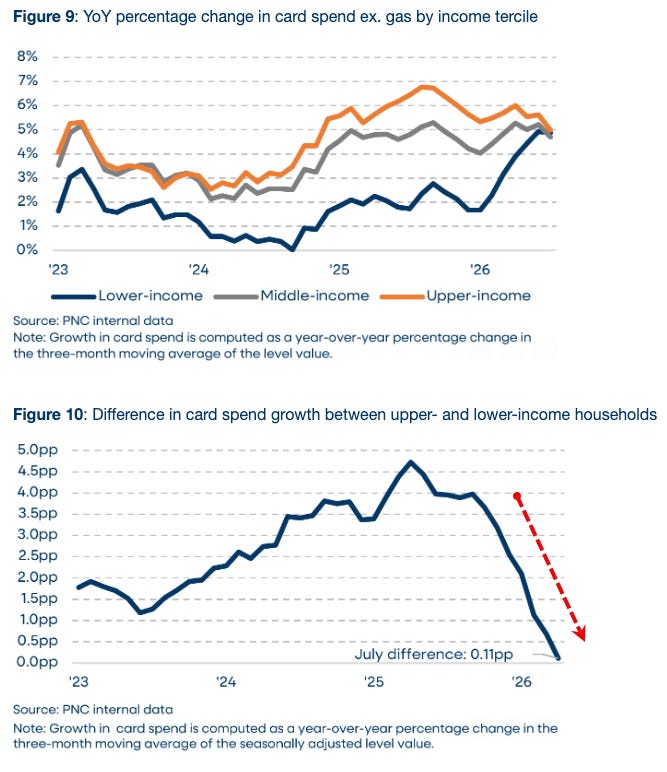
Lower-income spending growth is pushing ahead just fine, and whatever K-Shape there ever was, is no longer—the gap in lower- and upper-income spending growth is basically a rounding error, at this point.
Discretionary is cooking (especially the not-cooking kind)
It’s not just spending that’s cooking. Discretionary spending, especially, is pushing ahead just fine:
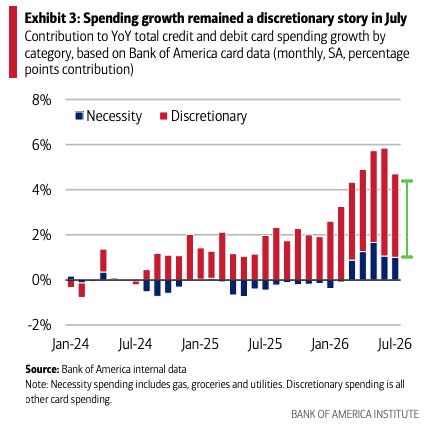
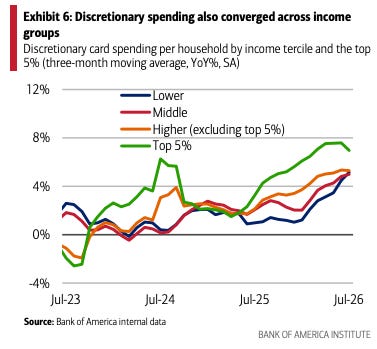
Lower-income discretionary spending shows very little evidence of any belt-tightening (and only the top-5% have meaningfully rolled-over thus far).
Gen-Z likewise has no K-Shape, now or ever:
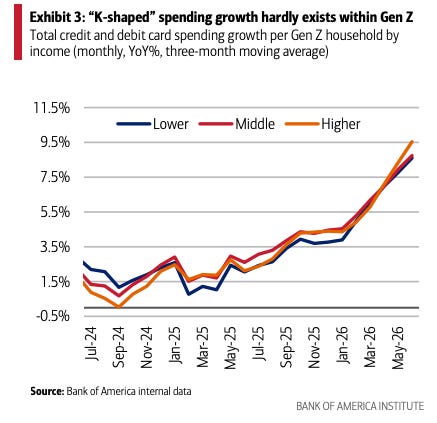
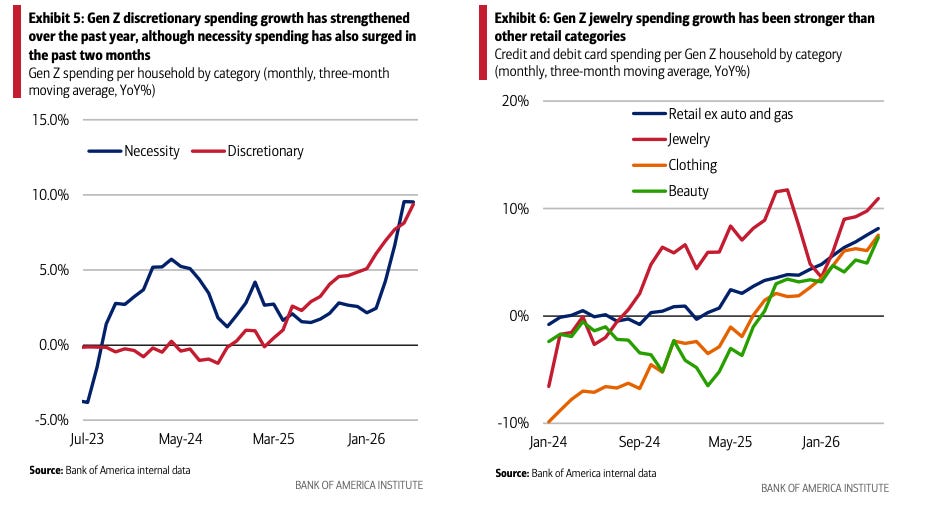
Every Gen-Z income cohort is spending up-and-to-the-right, discretionary spending is to the moon (as is necessity, lately), and there appears to be no dent in Gen Z’s taste for trivial fineries.
When it comes to burritos specifically, in fact, no one is spending relatively more on restaurants than lower-income households:
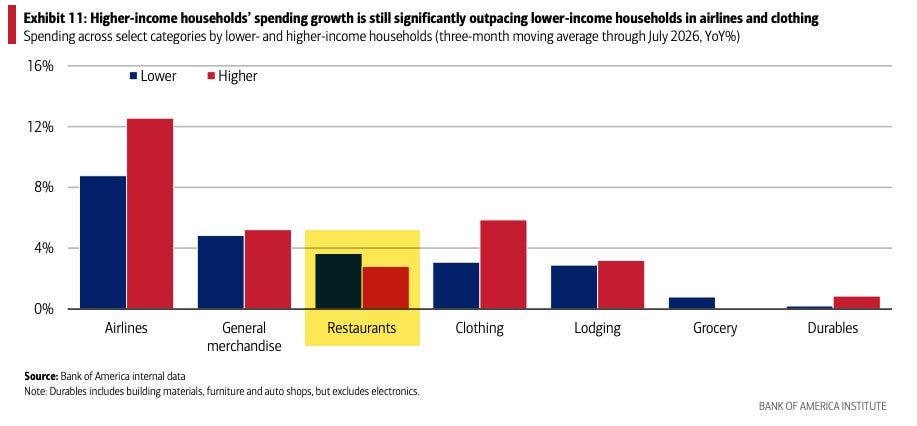
Once again, the only group that out-earned the price-increase of eating-out were the lowest-income workers, so this shouldn’t be a surprise.
Whatever the vibes may be, the data is pretty clear: the Almighty Consumer, and especially the Zoomer and/or Lower-Income Consumer, is spending without much apparent care in the world.
ICYMI


Lower-income consumers, throwing their weight around
To put a finer point on it, if the cost of a good life is, in fact, becoming a pain-point for the ‘common man,’ then at some level, common consumers are doing it to themselves. Gas prices? Sure. That’s a legit pain point, but there demand is highly elastic. Are services more expensive now, for most people? Yes, but again, that’s more of an upper class problem.
It’s more likely, however, that common consumers are just fine, and if they wanted to save more, they could, but they’re choosing not to. Trading down and discount shopping? Sure. But make more, spend more, is the broader theme.
It’s actually a bit surprising that spending is quite so strong, given that aggregate real income growth has been negative for good chunks of the year.
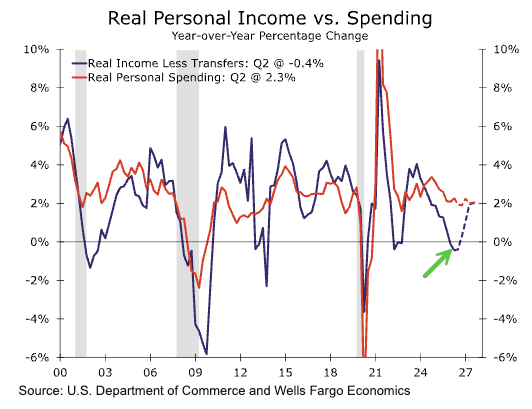
It makes me doubt some of the official income series (and prefer internal data, like BofA’s), and wonder whether side-hustle, unreported income is playing a bigger role than is currently understood.
To be sure, lower-income consumers aren’t indulging on everything—as per the chart above, airlines, for example, are increasingly a higher-income category. That’s been true for a while now, and it still comes back to higher labor costs, which has made flying more costly, even as previously included perks, are now paid add-ons (e.g. carry ons, seat selection, etc.).
Since the juice is increasingly not worth the squeeze for high-touch services, airlines (and hotels) have been relying more and more on less price-sensitive customers:
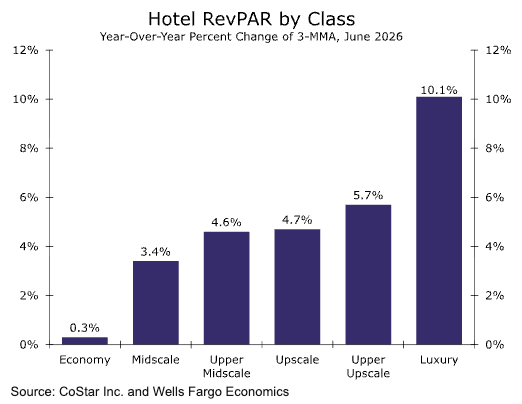
Hotels have been soaking the rich to make up for everyone else’s disinclination to stomach service shrinkflation.
Of course, all of this was entirely predictable (and indeed predicted). Lower-income workers have been the wage-winners of the secularly tight labor market, and the pass-through to higher-touch services is real and noticeable. Consumers are reacting, accordingly.
More broadly, the rising heft of the lower-income consumer continues apace:
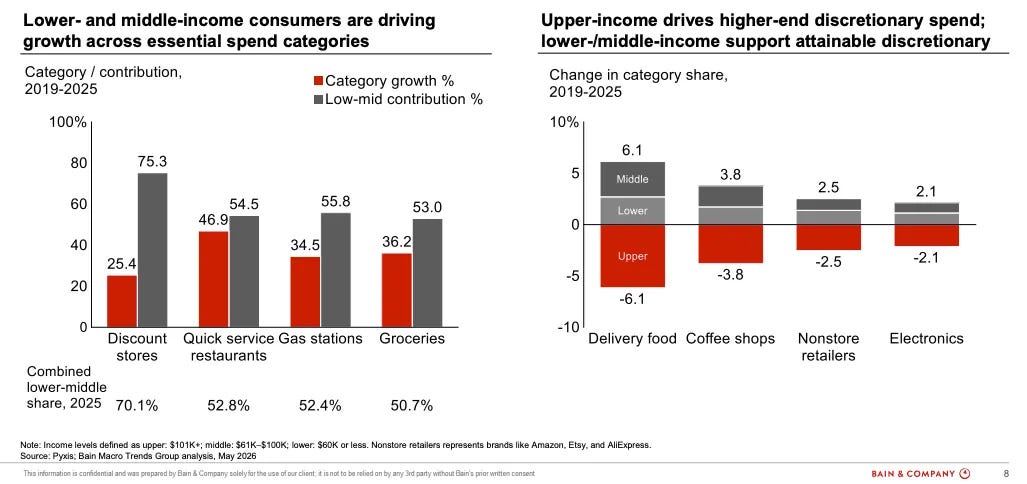
Lower-income consumers aren’t just dining out, they are the category-driver for the delivery segment!
Outside of gas prices, it’s pretty hard to argue that the cost of living has worsened for the proles. Quite the opposite, really.
Of burritos and status
So, yeah . . . if anyone has any grounds to complain about burrito prices, it’s higher income people. And if they are complaining, then I genuinely wonder what they might have had in mind when they started rooting for Main St. > Wall St.
So, what is burrito-gate, then?
