

Why Isn't the On-Ramp Working?
Musing about an unsettling feature of the new normal

still tough out there for the youngs
recapping the data that explains the most about the most things
retirees to the moon
wither the on-ramp? some theories . . . demand? AI?
the skills, but really expectations, mismatch
👉👉👉Reminder to sign up for the Weekly Recap only, if daily emails is too much. Find me on twitter, for more fun. 👋👋👋Random Walk has been piloting some other initiatives and now would like to hear from broader universe of you:
(1) 🛎️ Schedule a time to chat with me. I want to know what would be valuable to you.
(2) 💡 Find out more about Random Walk Idea Dinners. High-Signal Serendipity.Why Isn’t the On-Ramp Working?
One of the things that makes me uneasy about the present state affairs is the “broken onramp” to the labor market.
Mostly, things seem just fine—not great, but fine—but some things are a bit off.
If the working age population isn’t growing much (and it’s not), and retirements are beginning to accelerate again (and they are), then why are young folks still having a relatively difficult time getting hired? If workers are riding off into the sunset, and there’s a relatively scarce pool of replacements, then you’d expect new entrants to be in hot demand . . . but they’re not.1
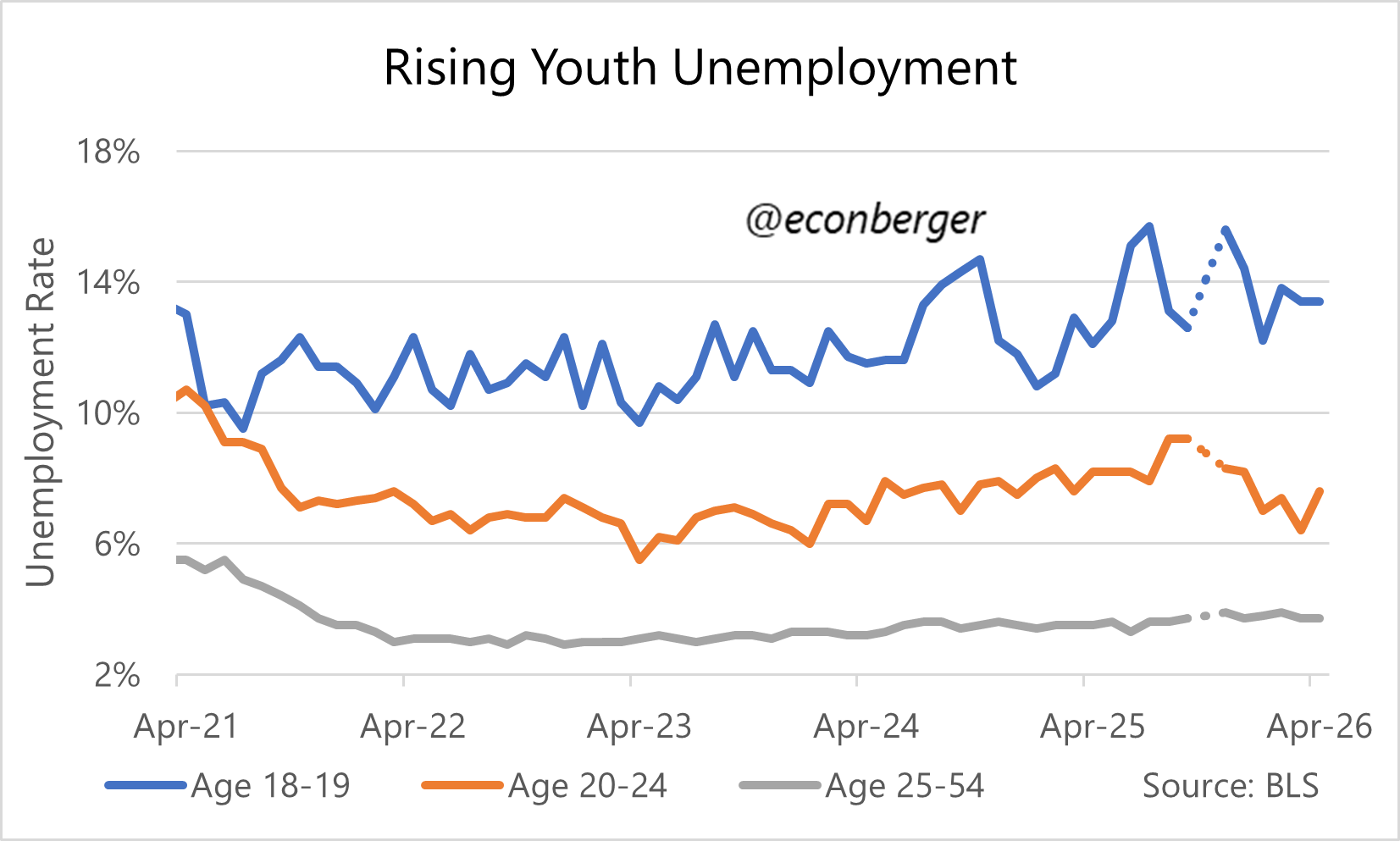
Unemployment for the 20-24yos got steadily worse, and then better, and then slightly worse again.
Perhaps, of course, that’s just noise, and youthful unemployment will revert to its recent positive trend . . . but even so, there’s still some trouble lurking beneath the surface of that recovery.
Take tech, for example. Employment rates did recover for the young ex-tech peeps, but the recovery wasn’t in tech:
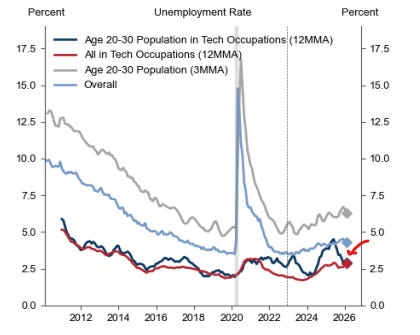
Young folks became employed again, but their employment must have come from some other part of the economy . . . where, I’m not entirely sure, yet.
Why is the “broken on-ramp,” so troubling?
Well, partly because it speaks to the narrowness of labor-demand, but more broadly because it’s a bad sign for the best-case-scenario of our aging-shrinking-workforce. Mostly, though, things are just different now, and when it’s different, it’s hard to read the tea leaves.
ICYMI


![Uncharted waters (reprise); Almighty Consumer check; Healthcare[-fraud] GDP?; AI-Lawyering for Me; Longs, but not shorts](https://substackcdn.com/image/fetch/$s_!MpiH!,w_140,h_140,c_fill,f_webp,q_auto:good,fl_progressive:steep,g_auto/https%3A%2F%2Fsubstack-post-media.s3.amazonaws.com%2Fpublic%2Fimages%2F00da6c53-cccf-43f3-b00b-ba932898ae46_429x429.png)


The data that explains the most about most things
To recap, behold, a selection of the scariest charts in the world (that also explain more about the present than probably any other charts).
For Developed Markets, the demographic picture is grim:
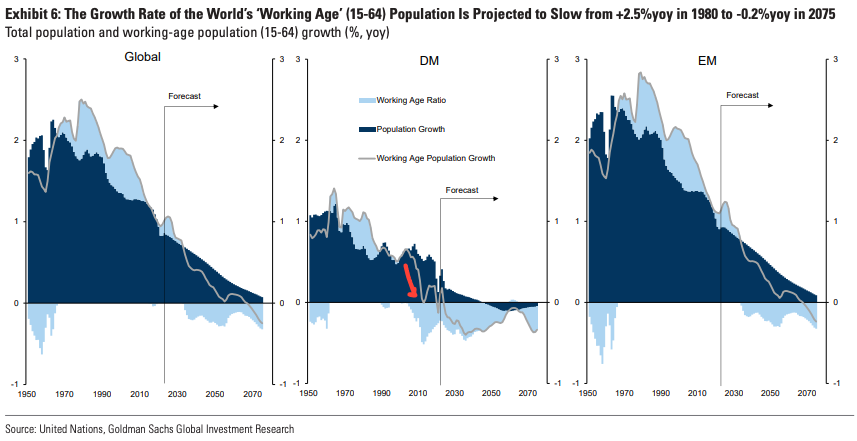
The working-age ratio (i.e. the ratio of 65+ yos to the rest of the workforce, aka the “dependency ratio”) has been trending the wrong way since the GFC, and not coincidentally, working age population growth is approaching zero-soon-to-negative.
Man, the GFC really was a killer.
Or rather, whatever happened ~15 years before the GFC that led working-age-pop-growth to fall off a cliff was a real killer . . . big surprise we ended up with a little ‘ole housing surplus, right?
But more to the point, at no point this century is the working-age population expected to grow in developed markets. Let that sink in. It’s a remarkable shift from the century prior, and truly, uncharted waters.
And while it’s true that people are working longer, retirements are not slowing down:
