

An Epic Inversion
5 Idea Friday: unknowable future (even when you know it); American exceptionalism; healthcare fraud strikes again; Kimi-Kimi-Kimi; Slok goes Random Walk

5 Idea Friday
a chart from the future no one would predict what’s next
bigger, longer, more profitable
healthcare domestic
productfraud strikes againChina distills models that don’t even exist, yet
Apollo’s Slok joins team Random Walk
👉👉👉Reminder to sign up for the Weekly Recap only, if daily emails is too much. Find me on twitter, for more fun. 👋👋👋Random Walk has been piloting some other initiatives and now would like to hear from broader universe of you:
(1) 🛎️ Schedule a time to chat with me. I want to know what would be valuable to you.
(2) 💡 Find out more about Random Walk Idea Dinners. High-Signal Serendipity.1. An Epic Inversion
Sometimes it’s fun to make present-day observations and wonder what you might have said in the past had your future self gone back in time to give you a glimpse of the future.
This is one of those observations:
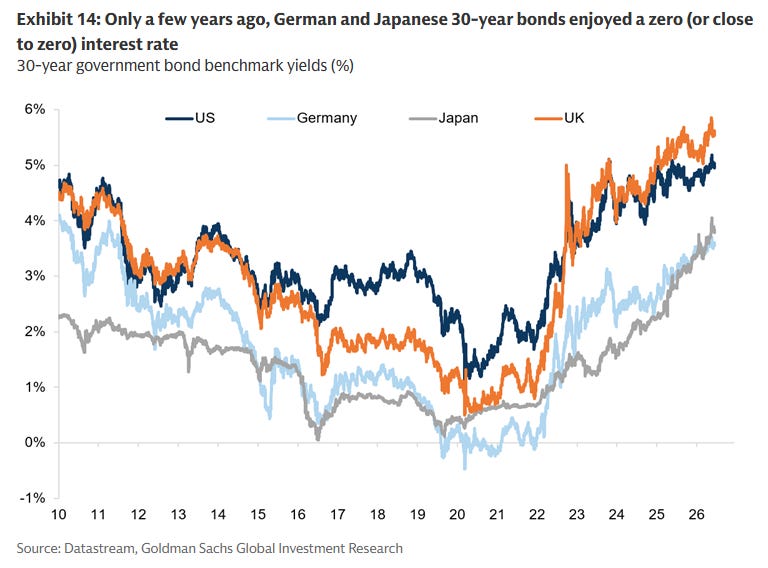
Long-dated rates are climbing a wall of worry, the world over.
If someone showed you this chart back in 2019, and asked you to predict the next 5 years, what do you think you would have said?
I’m pretty sure most people, my self included, would have sold everything and battened down the hatches, for whatever catastrophe was driving borrowing costs (and presumably runaway inflation) to the moon.
As it happens, had I or anyone else gone “risk off,” I would have missed out on an epic run in public equities. It turns out that predicting the future is hard, even when you know the future.
ICYMI


2. Bigger, Longer, More Profitable
I don’t have any profound takeaways here, but these are both pretty striking examples of American Exceptionalism.
It turns out that the most profitable companies are staying most profitable for longer than before:
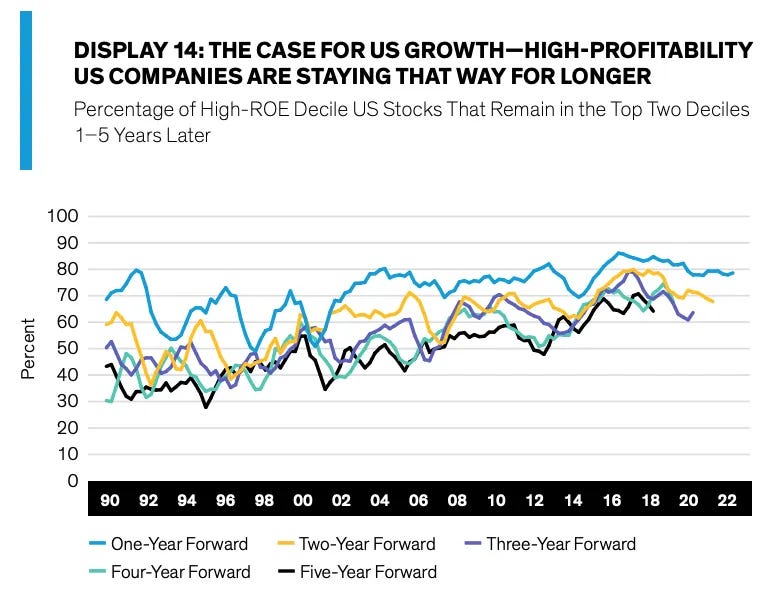
More than 60% of high ROE US stocks remain in the top ~20% of ROE five years later, a share that has doubled since 1990.
Part of the reason why the largest US techcos command such powerful multiples (even if less so, lately) is their epic ability to deliver historic profitability at unprecedented scale, and just keep on doing it.
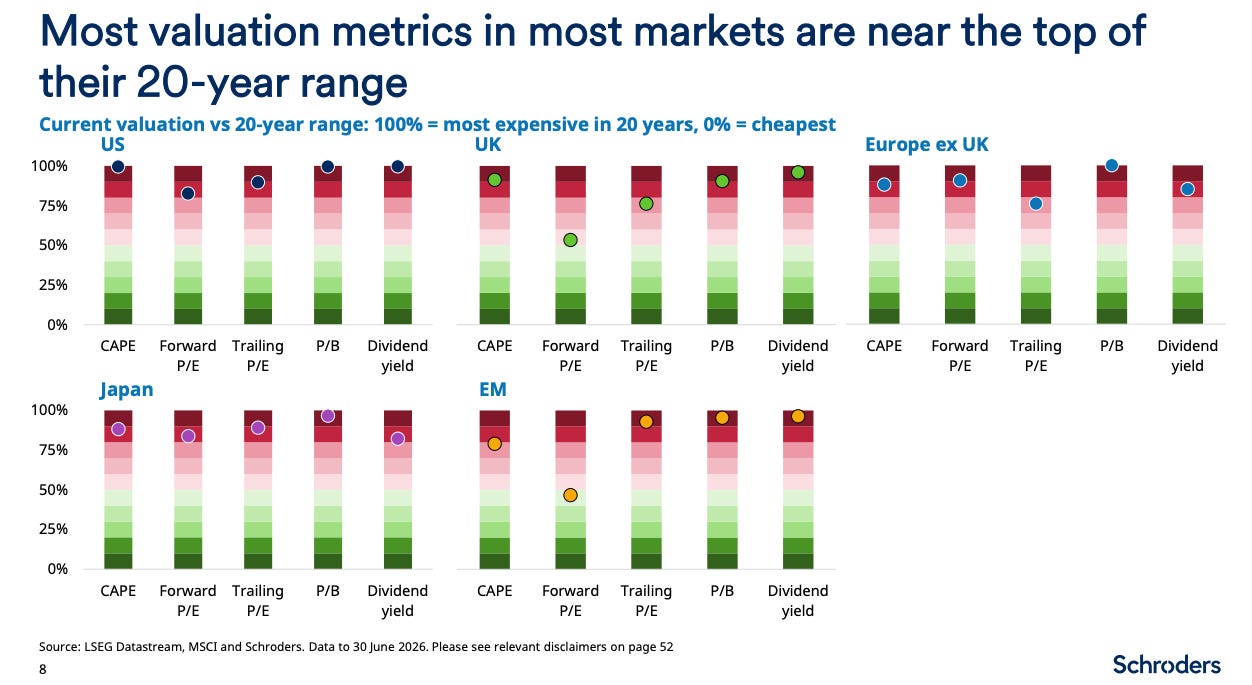
Most valuation metrics in most markets are near the top of their 20-year range.
OK, so the US isn’t the only expensive market, but all those markets together are roughly equal the size of the 10 largest companies in the US, so it’s really no comparison. There just aren’t that many companies who can both absorb huge amounts of cash, and deliver that kind of enduring performance.
Of course, the AI buildout is going to test some of those ROE bona fides—and it’s going to be up to the credit markets to make a lot of that happen—but that doesn’t make past-performance any less impressive. 1
Here is the second one.
US business cycles are getting longer, or perhaps more accurately, the peaks are getting higher:
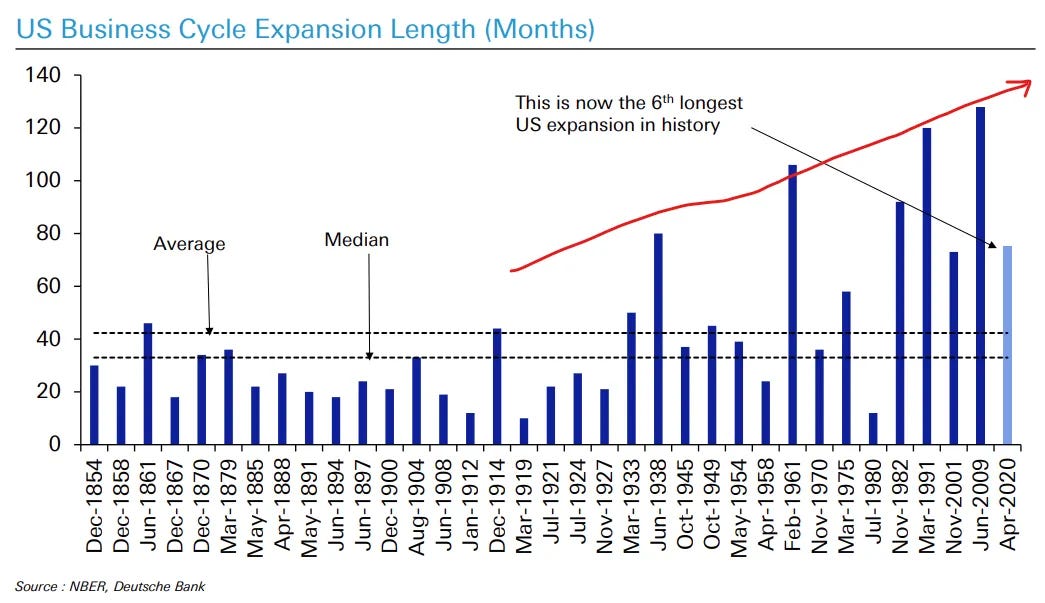
We’re currently in the 6th longest expansion cycle in our history, although query what the counter-factual would look like absent the non-economic pandemic recession.
Truthfully, it seems like the 80’s is really when the era of long cycles began. Maybe that’s a coincidence. Maybe it has something to do with the rising prominence of fiscal and then monetary (and fiscal) policy. Or maybe it has to do with speed and spread of information, keeping shocks and unwanted surprises to a relative minimum. Idk.
I just thought it was a notable observation.
3. More Healthcare Domestic Product Fraud
Random Walk was pretty early to the central role that home healthcare aids have played in the “private sector” job growth/catch-up story.
Random Walk probably wasn’t early enough in grasping the fraud implications, but with the benefit of hindsight, it seems pretty clear what happened: extremely weak eligibility and oversight controls unlocked an explosion of reimbursable services to create the illusion of “growth,” at the tax- and rate-payer’s expense. And yes, this exploit was especially popular in immigrant (legal or otherwise) communities, and yes, public officials were almost certainly in on the “Medicare fraud as a jobs program for migrants” plan, because how could they not be?
Anyways, it turns out that home health is probably not the only reimbursable exploit that flourished over the past few years.
